
Vyxarind Qylorith: The Edge Where Myth, Technology, and Identity Collide
In our rapidly shifting cultural and technological landscapes, new words occasionally emerge—phrases that at first sound like fantasy, myth, or art, but that seem to carry deeper resonance. Vyxarind Qylorith is exactly one of these. It is a name without a fixed dictionary meaning, but full of evocative possibilities. Across digital forums, creative writing circles, speculative technology blogs, and even spiritual discussion groups, “Vyxarind Qylorith” has begun surfacing as a kind of mythic‐technical metaphor: a nexus of change, ambiguity, and potential.
This article explores what Vyxarind Qylorith could mean, why it has appeal, how it might be used in narrative, technology, philosophy or identity, the risks implicit in such emergent concepts, and how we might responsibly engage with them.
What Is Vyxarind Qylorith? A Framework, Not A Fixed Definition
Because “Vyxarind Qylorith” is not (as far as available sources show) an established term in science or mythology, we should treat it as a framework or conceptual vessel—one into which many meanings can be poured. Some recurring motifs around it are:
-
A fusion of technology and mysticism: the blending of arcane or spiritual language (magic, energy, transformation) with cutting-edge tech (quantum, AI, adaptive systems).
-
Identity and symbolic transformation: it is used in some circles as a metaphor for change, metamorphosis, or evolution of self, especially in relation to digital or spiritual practices.
-
Ambiguity and mystery: its roots are unclear, its boundaries fuzzy. It’s sometimes treated like a myth, sometimes like an emerging technology, sometimes like a thought experiment.
From this base, we can sketch several possible interpretations or “faces” of Vyxarind Qylorith.
Possible Interpretations
1. Myth / Narrative / Fictional World
Vyxarind Qylorith may first appear in fantasy or science‑fiction: as the name of a world, a being, a system of magic, or a forgotten civilization. In such narratives:
-
Vyxarind might be a powerful entity or power source—a crystalline being, an ancient intelligence, a magical core.
-
Qylorith could be the realm, dimension, or interface through which Vyxarind interacts with the world—a magical lattice, an energy network, or a border between reality and something else.
Fictional uses allow for rich imagery: cosmic wars, mystical technologies, transformative journeys, portals or thresholds of consciousness. Writers could use the term to evoke immemorial power, ancestral knowledge, or unpredictable forces beyond human control.
2. Technology, Hybrid Systems, and Speculative Science
Another way to read Vyxarind Qylorith is as speculative technology: an advanced, possibly emergent system that combines quantum processing, adaptive interfaces (AI or machine learning), material science, perhaps even bio‑integration.
Some speculations suggest that:
-
Vyxarind is akin to a quantum crystalline matrix: stable, able to maintain coherence, capable of handling very high information densities.
-
Qylorith functions like the adaptive shell or interface—sensor networks, learning algorithms, self‑adjustment to environment, perhaps even self‑healing or bio‑compatible materials.
In this view, Vyxarind Qylorith might serve in domains such as:
-
Next‑generation computing (quantum or neuromorphic systems),
-
Frontier medical devices (neural implants, biofeedback systems),
-
Environmental tech (smart materials, energy systems that adapt),
-
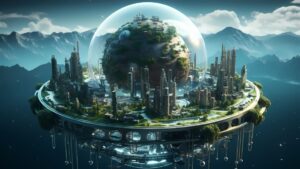
Urban infrastructures infused with adaptive intelligence.
3. Philosophical / Symbolic / Transformative Identity
Beyond tech or fiction, the concept is also rich in symbolic potential:
-
As a metaphor for personal transformation: “Vyxarind” representing the spark, impulse or catalyst for change; “Qylorith” being the journey, the terrain of transformation, perhaps with trials, resistance, growth.
-
As a frame for exploring identity in the digital age: where people’s selves are shaped by online presence, virtual worlds, AI interaction, gaming, avatars; the ambiguity between what is “real” and what is constructed. Vyxarind Qylorith can stand for that liminal zone.
-
In spiritual or mystical contexts, perhaps akin to ideas of energetic realms, higher awareness, subtle bodies, collective unconscious. The term may resonate with those who are exploring new spiritualities that draw upon both tradition and imagination.
Why Vyxarind Qylorith Matters: What It Tells Us About Our Time
Emerging speculative terms like this are seldom just curiosities—they often reflect deeper currents in society. Here are some of the reasons Vyxarind Qylorith has traction, and why it offers insight into several contemporary trends.
-
Desire for Integration of Magick and Science
Many people today feel a split: science has given us immense power, but left a spiritual or aesthetic void. Terms that blend tech + magic (or mystical language) help address that yearning. Vyxarind Qylorith sits right in that interface. -
Blurring Boundaries: Fiction, Digital Identity, Reality
With virtual worlds, social media, avatars, augmented/virtual reality, AI personalities, etc., what counts as real, imaginative, or symbolic is deeply interwoven. Vyxarind Qylorith, as a concept, thrives in that overlap—suggesting narratives that are part myth, part code, part experience. -
Transformative Technology & Ethical Complexity
The imaginative sketches around Vyxarind Qylorith touch on powerful technologies—quantum computing, adaptive AI, biointerfaces. All of these have real potential, but also ethical risk (privacy, autonomy, inequality). Speculative ideas help us anticipate what we want or don’t want in future. -
Creativity as Meaning‑Making
When traditional institutions (religion, politics, culture) feel fragmented or under fire, people often create new myths, symbols, frameworks. Vyxarind Qylorith is one such emergent symbol: providing space for new stories, new values, new ways to make sense of life.
Applications and Hypotheticals
If one were to build with Vyxarind Qylorith—to turn its mythic/technical metaphor into something actionable—what might that look like? Here are some hypothetical applications in different domains.
| Domain | Possible Use of Vyxarind Qylorith |
|---|---|
| Speculative Fiction / Art | Use the term as central myth or world‑building. Cities built on “Qylorith nodes”; heroes or anti‑heroes called Vyxarind, etc. Artist installations combining crystals, light, sound, code. |
| Tech R&D / Experimental Design | Prototype hybrid devices: materials that change state in response to emotion (biometric input), computing cores using quantum or near‑quantum methods plus adaptive shells or skins. Explore neural implants or brain‑machine interfaces with aesthetic or symbolic design. |
| Spiritual / Well‑Being Practices | Using “Vyxarind Qylorith” as a meditation metaphor: meditative journeys imagining moving from spark to lattice; combining breathwork, visualization, ambient sound, perhaps immersive VR as adjunct. Possibly have communities share rituals, artistic expression around the idea. |
| Philosophy / Thought Experiment | Use it to explore what “post‑human”, “augmented consciousness”, “digital soul”, or “machine‑mythic” could mean. What are the ontologies (what exists) when humans interface with AI, virtual identity, non‑human agents? Vyxarind Qylorith can be a name given to the boundary space. |
Challenges, Risks, and Ethical Considerations
While the idea is inspiring, speculative, and full of potential, there are also risks and cautions. Any time one works with emergent mythic‑technical frameworks, especially ones involving identity, technology, or possible physical or mental integration, some pitfalls must be kept in view.
-
Vagueness and Misuse
When a concept is highly ambiguous, people may project whatever they want onto it. This can lead to misunderstandings, or worse, manipulations—commercial, political or ideological. Someone might exploit the mystique of “Vyxarind Qylorith” to sell unverified tech, exploit spiritual grief, etc. -
Technological Ethical Questions
If actual tech is built under that name or style—biointerfaces, AI systems processing personal or emotional data—concerns arise: privacy, consent, data ownership, safety, accessibility. Who builds it, who controls it, who benefits? -
Cultural Appropriation and Respect
Many mystical, spiritual, or symbolic practices being drawn into such speculative frameworks come with histories and traditions. Care must be taken not to appropriate, misrepresent, or disrespect existing cultures’ symbols or beliefs. -
Over‑Romanticizing Risky Innovation
Celebrating the magical side of science can inspire, but it can also blind people to engineering limitations, the costs, the side effects. Technologies like quantum systems, neural implants, etc., are not magical in the literal sense—they have constraints, require huge resources, risk failure. -
Equity and Access
If “Vyxarind Qylorith” becomes associated with powerful tech or high‑cost experiences (immersive VR, biointerfaces, etc.), there is risk that it ends up accessible only to elites, exacerbating inequality.
How to Engage with the Concept Responsibly
For creators, thinkers, technologists, or people just curious, here are suggestions for engaging with Vyxarind Qylorith in ways that are thoughtful and generative.
-
Define your context: Before using the term, be clear what it means for you. Is it metaphor, fiction, spiritual practice, tech prototype? Giving it a working definition prevents drift and miscommunication.
-
Use it as a bridge, not a crutch: Leverage its evocative power to open fresh thinking, but ground projects in evidence, ethics, technical feasibility where relevant.
-
Collaborate broadly: Include voices from different disciplines—artists, engineers, ethicists, users. Diverse perspectives can help spot risks and enrich the symbolic and practical potential.
-
Document and share transparently: If building something (e.g. an art project, tech prototype, wellness practice) under this name, share how it works, what its limitations are, what ethical safeguards are in place.
-
Balance imagination with critique: Celebrate wonder and possibility, but also ask hard questions. What could go wrong? Who could be harmed? Who is excluded?
Possible Future Trajectories
Looking ahead, how might the idea of Vyxarind Qylorith evolve, and what roles could it play in coming years?
-
Myth‑tech hybrid art movements: Artists and designers using immersive tech, crystals, ambient computing to create new installations; Vyxarind Qylorith as theme or underlying mythos.
-
Experimental tech labs using speculative frameworks to prototype interface devices, energy materials, or AI systems that are more “poetic” and human‑centered rather than purely utilitarian.
-
Spiritual / wellness communities adopting the concept as metaphor for healing practice, group ritual, or creative meditation, possibly using art, music, VR/AR as tools.
-
Academic interest in philosophy of technology, digital identities, speculative design might pick up “Vyxarind Qylorith” as a case study of emergent myth making: how culture invents new archetypes in response to tech changes.
Conclusion
Vyxarind Qylorith is not (yet) something you can look up in a standard encyclopedia. It does not have one fixed meaning. But in that very openness lies its power. It points toward what we are collectively wondering about: the meeting places of myth and machine, the shape of identity in digital and spiritual realms, the creative imagination’s role in shaping technological futures.
Whether one uses Vyxarind Qylorith in fiction, in art, in speculative tech design, or as a metaphor for one’s own inner evolution, it invites us to imagine new possibilities. It challenges us to define what matters in the spaces between the known and the unknown. And if we approach it with curiosity, responsibility, and openness, Vyxarind Qylorith may become more than a phrase—it might be one thread in the tapestry of future‑humanity.










Post Comment