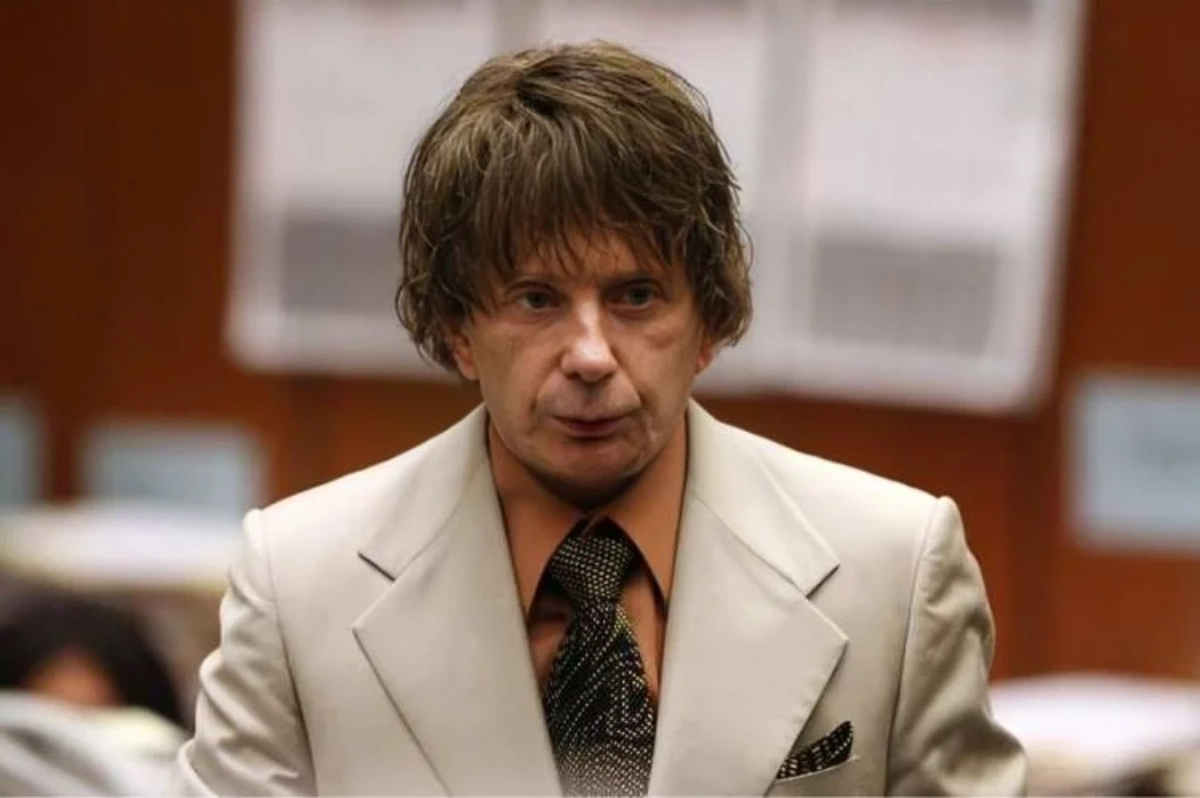
Gary Phillip Spector — Understanding the Name Behind Phil Spector
Important clarification: The name Gary Phillip Spector generally refers — not to a separate person — but to the legal/birth name (or variant) of the famed record‑producer and convicted murderer better known as Phil Spector. Many public references to “Gary Phillip Spector” are, in fact, references to Phil Spector himself.
This article examines why the name “Gary Phillip Spector” appears in some sources; how it relates to Phil Spector’s life, career, family and criminal case; and how this dual naming has fed confusion and, sometimes, misinterpretation in public understanding.
Early Life — From Harvey Philip to the Spector Legend
-
The man known publicly as Phil Spector was born Harvey Phillip Spector on December 26, 1939, in the Bronx, New York.
-
In 1953, after his father’s suicide in 1949, his family moved to Los Angeles.
-
In high school, he learned guitar, immersed himself in music, and by 1958 — under the name The Teddy Bears — had his first and biggest hit: To Know Him Is to Love Him, a teenage‑pop classic.
-
As the 1960s dawned, Spector transitioned from performer to producer — apprenticing with the songwriting/producer team of Jerry Leiber and Mike Stoller, and co‑founding his own label, Philles Records.
It was under this rebirth that “Phil Spector” emerged not just as a name — but as a brand, a creative identity associated with groundbreaking pop music.
The “Wall of Sound” — Spector’s Signature Artistic Legacy
-
Spector became renowned for pioneering a production technique later dubbed the “Wall of Sound” — a lush, multi‑layered orchestral/pop sound built by combining numerous instruments, vocal harmonies, and innovative studio effects.
-
Through Philles Records, he produced and shaped the sound of prominent groups and artists, including The Ronettes, The Crystals, and The Righteous Brothers — acts that defined 1960s pop.
-
Some of the era’s most iconic hits — like Be My Baby, Da Doo Ron Ron, You’ve Lost That Loving Feeling — carried the stamp of Spector’s artistic vision.
-
In the early 1970s, his influence extended to solo works by former members of The Beatles: he produced albums for John Lennon and George Harrison, including a controversial version of the Beatles’ final album, Let It Be.
-
Music historians often cite him as the first “auteur” of the modern pop/rock studio: not merely a facilitator, but a creative director of sound.
Thanks to these innovations, Spector’s work left an indelible mark on popular music, influencing generations of producers and musicians.
Personal Life — Family, Name Variants, and the Adoption of Gary Phillip
Part of what makes the “Gary Phillip Spector” name confusing is that within his private/family life, Spector’s name — and his family relationships — underwent shifts and claims that sometimes diverged from the public narrative.
-
In 1968, Spector married Ronnie Spector (born Veronica Bennett). Together, they adopted children: first Donté Phillip Spector in 1969; two years later, as a Christmas present, they adopted twins — Louis Phillip Spector and Gary Phillip Spector.
-
Thus, “Gary Phillip Spector” has been used to refer — especially in legal or adoption‑related contexts — to being a child of Phil and Ronnie.
-
However, confusion arises because some sources treat “Gary Phillip Spector” as if it were the real name of Phil Spector himself — or a variant thereof. Indeed, one article explicitly explains:
“There is often confusion online about ‘Gary Phillip Spector’ being a separate individual from Phil Spector. In truth, they are the same person. Gary Phillip Spector is his birth/legal name, while ‘Phil Spector’ was his public/professional identity.”
-
This discrepancy in naming — mixing legal/birth names, adopted children’s names, and public stage name — has contributed to ambiguity and misunderstanding around who is who in the Spector family tree.
From this complexity emerges a strange duality: “Gary Phillip Spector” can refer either to the adopted son of Phil & Ronnie, or — incorrectly — be used in place of Phil Spector himself.
Crime, Trial, and the Dark Turn in Reputation
-
The fictional glamour of 1960s pop collapsed dramatically in 2003, when actress Lana Clarkson was found shot dead in Spector’s mansion in Alhambra, California.
-
Initially, Spector claimed the actress’s death was a suicide, saying she “kissed the gun.” But his limo driver testified that Spector came out carrying a gun and told him, “I think I killed somebody.”
-
In 2007, the first trial ended in a mistrial (jury was hung — 10 vs. 2 for conviction).
-
A retrial began in 2008; on April 13, 2009, Spector was convicted of second‑degree murder and, in May 2009, sentenced to 19 years to life.
-
After his conviction, many details of his troubled private life emerged: he had a reputation for violent outbursts, threatened people with guns — including artists during recording sessions — and ex‑wife Ronnie Spector later alleged years of psychological abuse.
-
Spector remained in prison, where his health deteriorated. He died on January 16, 2021, at age 81. His daughter later confirmed the cause of death as complications from COVID-19.
This tragic fall from greatness transformed public memory: a once‑celebrated musical genius, now inextricably linked to violence, scandal, and crime.
Legacy and Controversy — Genius, Horror, and Everything in Between
☑️ Musical Innovation & Influence
-
Spector changed the way pop records were made: treating the studio as an instrument, and building a layered, dramatic orchestral sound that influenced countless producers and bands.
-
His work with girl groups, vocal harmonies, and orchestration helped define the 1960s sound — romantic, emotional, timeless. Many of the songs produced under his direction remain iconic decades later.
-
Collaborations with major names — from John Lennon and George Harrison to The Righteous Brothers, The Ronettes, Ike & Tina Turner — show the breadth and reach of his influence
🚫 Personal Life, Violence & Criminal Record
-
The revelations about abuse and alleged threats to those around him — including family and artists — painted a darker side. After the murder trial, many saw a pattern of power, control, and violence spanning decades.
-
His conviction for murder permanently marred his legacy. For many, criminal actions outweigh musical talent. The duality of art vs. wrongdoing remains controversial and painful.
📛 The Name Confusion — Gary vs. Phil Spector
-
The use of “Gary Phillip Spector” in various sources — as an alias of Phil Spector, or as one of his adopted sons — has caused widespread misunderstanding.
-
Some less‑scrupulous websites or media have mistakenly treated “Gary Phillip” as a distinct person, leading to erroneous biographical snippets. In reality, “Gary Phillip Spector” most often refers to Phil Spector himself, or — correctly — to his adopted son.
Why the Confusion? Names, Documents, and Public Perception
-
Multiple names over a lifetime: Harvey Phillip Spector → public “Phil Spector” → legal documents sometimes referring to his full name or variants (e.g., Gary/Phillip) make tracking identity messy.
-
Adopted children with overlapping names: With a son named Gary Phillip, some online sources mix up the father and son, or mis‑assign statements.
-
Public memory vs. private record: The legend of “Phil Spector — the producer” overshadows personal/family details; mixing real names and aliases emerges only in court documents, tabloids, or retrospective biographies.
-
Sensationalism and misinformation: Given his notoriety — both genius and criminal — media outlets sometimes simplify, exaggerate, or conflate facts, perpetuating confusions around identity.
Conclusion — The Dual Identity of a Complex Legacy
Understanding “Gary Phillip Spector” helps to unravel a tangled web of identity, fame, infamy, and legacy. At root, the name is tightly linked to a man — Harvey Phillip “Phil” Spector — whose creative genius reshaped 1960s pop, yet whose personal life and actions devastated countless lives.
Spector’s story is a cautionary tale: brilliant artistry does not preclude cruelty, abuse, or tragedy. When referring to “Gary Phillip Spector,” it is essential to consider context — is it the record‑making prodigy, the legal defendant, or the family man (i.e., adopted son)? Each version carries very different weight.
In the end, Spector’s contributions to music remain undeniable; but so do the consequences of his darker impulses. The ambiguity around his name and family only compounds the challenge of reconciling his artistic legacy with his moral and criminal legacy.














Post Comment