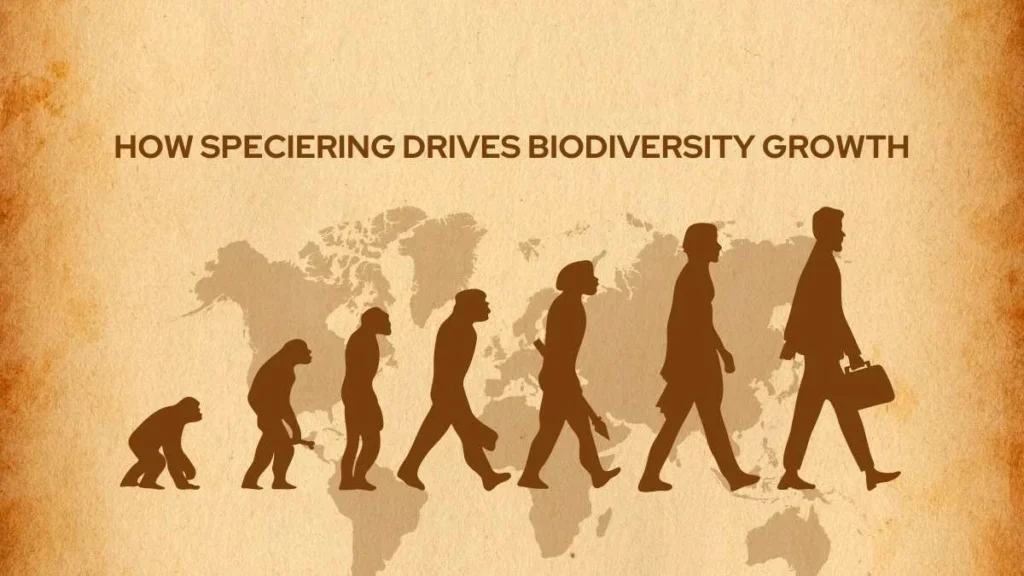
Understanding Speciering: The Process of Species Formation and Evolution
Speciering, derived from the concept of speciation, refers to the natural process through which new and distinct species arise from existing ones. It is one of the most fundamental concepts in evolutionary biology, offering a deep understanding of how the diversity of life on Earth has evolved over millions of years. While speciation has fascinated scientists since the time of Charles Darwin, it continues to be an active field of study as new genetic, ecological, and behavioral insights emerge.
This article explores the meaning, mechanisms, and types of speciering, its role in evolution, and its implications for biodiversity and conservation.
What Is Speciering?
Speciering is the process through which populations of a single species diverge over time to form new species. This process occurs when genetic differences accumulate to the point that individuals from different populations can no longer interbreed successfully or produce fertile offspring. In simpler terms, speciering marks the point where one lineage splits into two or more separate evolutionary paths.
The word “speciering” is often used interchangeably with speciation, but it can also refer more broadly to the evolutionary and ecological forces driving this division. It is an ongoing process, as living organisms continue to adapt to environmental changes, migrate to new habitats, and evolve new traits that lead to reproductive isolation.
The Biological Foundation of Speciering
At the heart of speciering lies the concept of reproductive isolation, which prevents gene flow between populations. This isolation can be caused by physical barriers, ecological differences, behavioral changes, or genetic incompatibilities.
Reproductive isolation can occur before or after fertilization:
-
Prezygotic isolation prevents mating or fertilization between species. Examples include different mating seasons, distinct courtship behaviors, or mechanical differences in reproductive organs.
-
Postzygotic isolation occurs after fertilization, leading to inviable or sterile offspring. The classic example is the mule, a sterile hybrid between a horse and a donkey.
When these isolating mechanisms persist over generations, populations begin to evolve independently. Natural selection, genetic drift, and mutations then reinforce these differences until distinct species emerge.
The Mechanisms Driving Speciering
Speciering does not occur in a single way; rather, it can follow several different evolutionary paths depending on the environmental and genetic conditions involved. Below are the main types of speciering recognized by evolutionary biologists:
1. Allopatric Speciering
This is the most common form of speciation. It occurs when a population is geographically separated by barriers such as mountains, rivers, deserts, or oceans. Once isolated, each group experiences different selective pressures, mutations, and genetic drift, leading to divergence over time.
For example, when a river divides a population of animals, individuals on each side may adapt to slightly different environments. Over thousands or millions of years, these populations may evolve into separate species incapable of interbreeding.
The famous example of allopatric speciering comes from Darwin’s finches in the Galápagos Islands. Each island’s finch population adapted to different food sources, resulting in distinct beak shapes and behaviors.
2. Sympatric Speciering
In sympatric speciering, new species arise within the same geographic area, without physical separation. This process is often driven by ecological or behavioral factors such as preference for different habitats or food sources, or variations in mating behavior.
In plants, sympatric speciering can occur through polyploidy—a condition in which an organism gains an extra set of chromosomes, making it reproductively incompatible with its parent species. In animals, it can happen through sexual selection or adaptation to distinct ecological niches.
3. Parapatric Speciering
Parapatric speciering occurs when populations occupy neighboring but distinct environments. There is limited gene flow between them, but not complete isolation. Over time, different selective pressures in these environments cause genetic divergence, eventually leading to speciation.
An example can be found in grass species near mines, where metal-tolerant plants evolved alongside non-tolerant ones. Although they grow close to each other, their adaptations make crossbreeding less successful.
4. Peripatric Speciering
A variant of allopatric speciation, peripatric speciering occurs when a small group becomes isolated at the edge of a larger population’s range. Because the isolated group is small, genetic drift has a stronger effect, and new mutations can spread rapidly. Over time, this can lead to the formation of a new species.
A classic example is found in island ecosystems, where small founding populations evolve rapidly due to limited genetic diversity and strong environmental pressures.
The Role of Natural Selection and Genetic Drift
Two main evolutionary forces drive speciering: natural selection and genetic drift.
-
Natural selection promotes speciation by favoring traits that enhance survival or reproductive success in specific environments. When different populations experience distinct environmental pressures, they adapt in unique ways, eventually diverging enough to form new species.
-
Genetic drift, on the other hand, refers to random changes in gene frequencies that occur more strongly in small populations. Over time, drift can lead to the loss or fixation of certain traits, reinforcing divergence between populations.
When combined with mutation—the ultimate source of genetic variation—and migration (or its absence), these mechanisms shape the evolutionary pathways that lead to speciering.
Behavioral and Ecological Factors in Speciering
Beyond geography and genetics, behavior and ecology play crucial roles in the emergence of new species. Behavioral changes such as new mating rituals, songs, or visual signals can quickly lead to reproductive isolation, especially in animals that rely on complex courtship displays.
For instance, certain species of frogs and crickets differ only in the pitch or rhythm of their mating calls. Females selectively respond to the songs of males of their own kind, effectively creating barriers to interbreeding.
Ecological factors, such as differences in diet, habitat, or timing of reproduction, also drive speciering. Two populations that adapt to different food sources or breeding seasons can become reproductively isolated even if they live in the same area.
Genetic Evidence for Speciering
Modern genetics has provided powerful tools to study speciering in detail. Advances in DNA sequencing allow scientists to compare genomes of closely related species, revealing the genetic changes responsible for reproductive isolation.
For example, genomic studies of fruit flies (Drosophila) have identified specific genes linked to mating preferences and hybrid sterility. Similarly, comparisons of bird genomes show how differences in genes controlling plumage color and song patterns contribute to species divergence.
The concept of the “speciation continuum”—where populations exist along a gradient from fully interbreeding to completely isolated—has gained popularity in recent years. This view emphasizes that speciering is not a single event but a gradual process shaped by ongoing genetic and ecological interactions.
Speciering in Action: Real-World Examples
Speciering is not just an ancient or theoretical process—it continues to happen today. Here are a few notable examples observed in recent times:
-
Apple maggot flies (Rhagoletis pomonella): Originally living on hawthorn trees, some flies began infesting apple trees introduced by humans. Over time, differences in host preference and mating behavior have led to reproductive isolation, signaling the beginning of a new species.
-
Cichlid fish in African lakes: Hundreds of cichlid species evolved rapidly within isolated lake systems through sexual selection and ecological specialization. Their incredible diversity makes them a textbook example of adaptive radiation.
-
London underground mosquitoes (Culex pipiens molestus): These mosquitoes adapted to living in underground tunnels, evolving distinct behaviors and breeding preferences from their surface-dwelling relatives—an example of rapid, human-driven speciering.
These examples demonstrate that speciering can occur quickly under the right ecological and genetic conditions, sometimes even within human lifetimes.
The Importance of Speciering in Evolution and Biodiversity
Speciering is the primary driver of biodiversity. Every plant, animal, and microorganism on Earth exists because, at some point in evolutionary history, its ancestors underwent speciation. Without this process, ecosystems would lack the complexity and resilience that sustain life.
From an ecological perspective, speciering helps fill ecological niches, ensuring that resources are used efficiently and that ecosystems remain balanced. It also promotes genetic innovation, allowing organisms to adapt to changing environments.
In conservation biology, understanding speciering is vital. Human activities such as deforestation, climate change, and pollution can accelerate or disrupt speciation processes. Protecting habitats and maintaining genetic diversity are essential to preserving the potential for future speciation—and therefore the long-term survival of life on Earth.
Challenges in Defining and Identifying New Species
Despite its importance, identifying when speciering has completed remains a challenge. The biological species concept, which defines species as groups capable of interbreeding and producing fertile offspring, works well for many organisms but not all. For example, some distinct species can still produce hybrids, while others reproduce asexually.
Alternative approaches, such as the phylogenetic species concept (based on evolutionary relationships) and the morphological species concept (based on physical traits), provide additional frameworks. However, nature rarely fits neatly into human definitions, reminding us that speciering is an ongoing, dynamic process rather than a fixed boundary.
Conclusion: The Endless Dance of Life and Evolution
Speciering embodies the creativity of evolution—the endless process through which life diversifies and adapts to a changing world. From the first single-celled organisms to the dazzling array of species that inhabit our planet today, speciering has shaped every form of life.
By studying how new species arise, scientists gain insights not only into the past but also into the future of evolution. As the environment continues to change, new species will emerge, while others may disappear. Understanding speciering helps us appreciate this delicate balance and the profound interconnectedness of all living beings.












Post Comment